Revenue focus
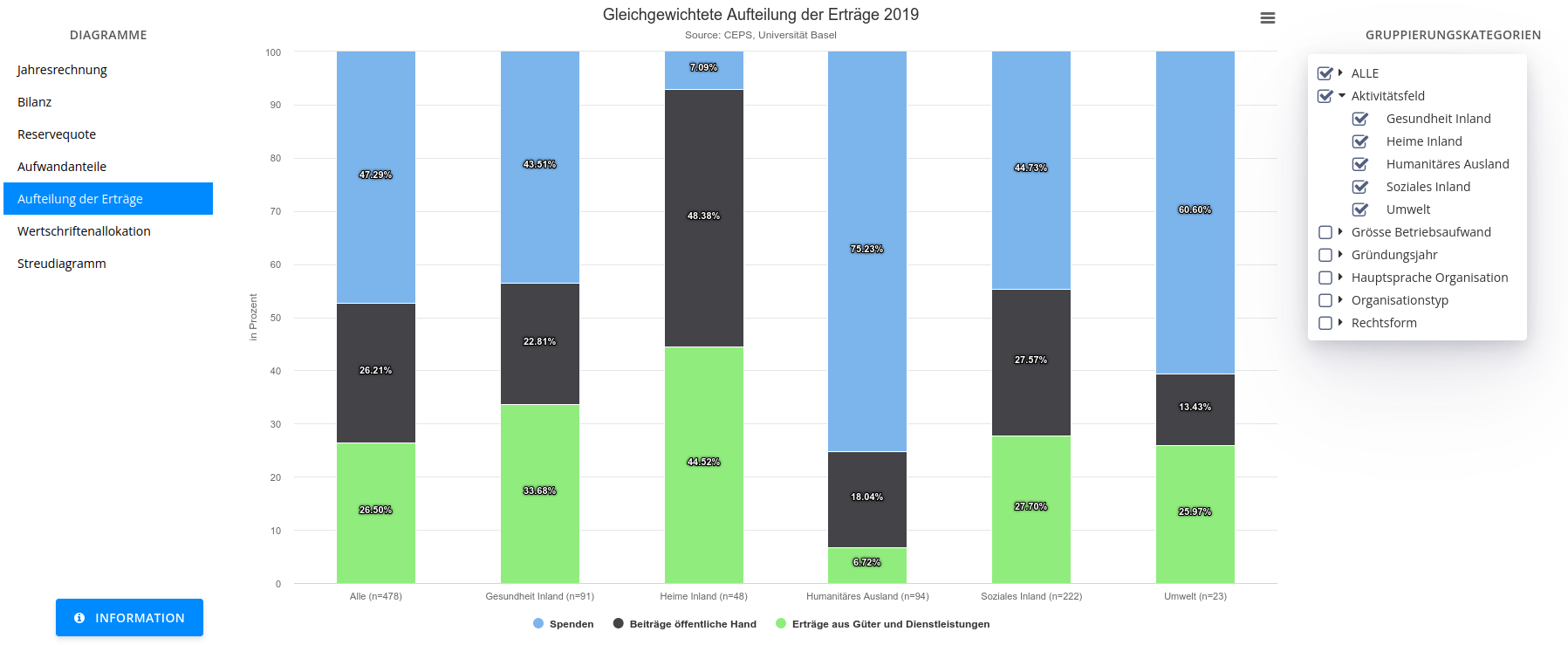
The figure below shows the average percentage distribution of the income of the organizations in the year according to the field of activity of the organizations. Organisations in the field of humanitarian abroad (third pillar from the right) have the highest percentage of donations. In the case of domestic homes (third column from the left), however, donations are the smallest source of income.
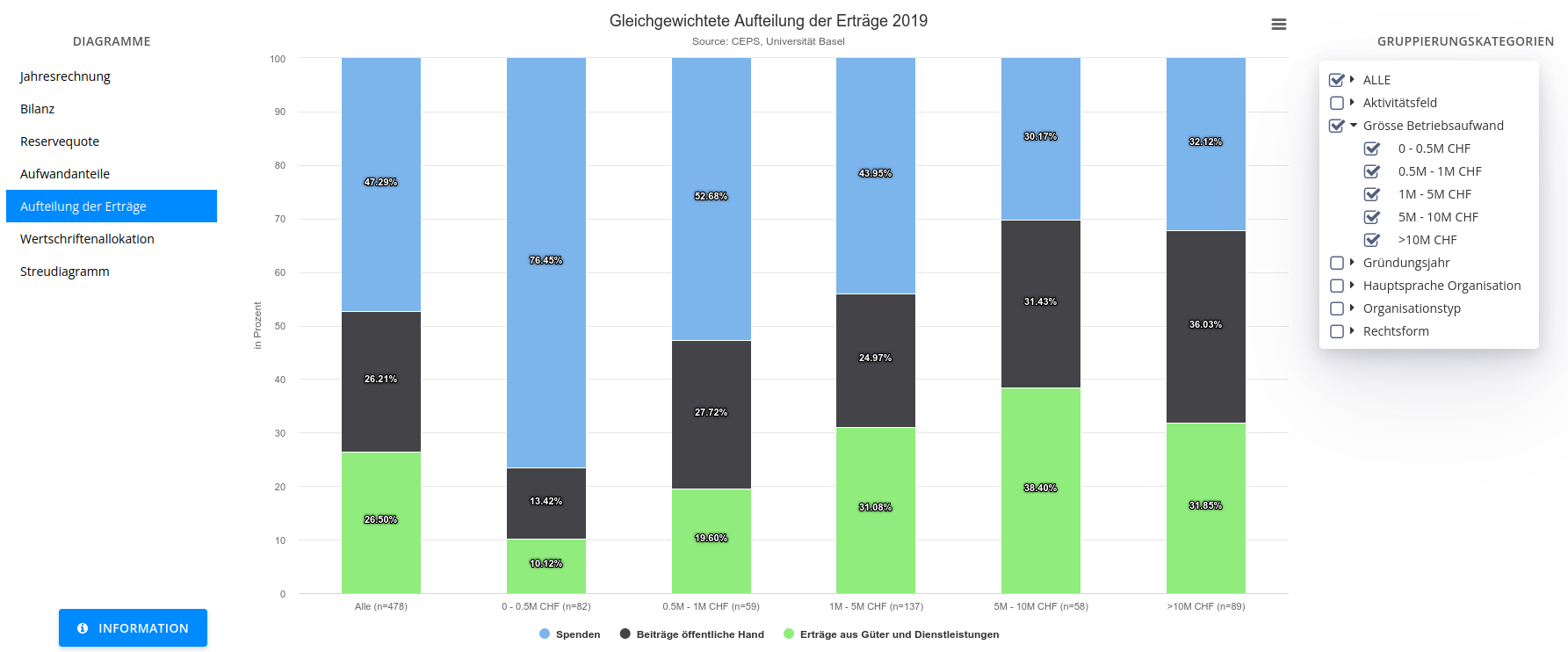
The larger (measured in terms of operating expenses on the x-axis) organizations are, the smaller is the percentage of donations received (Figure below). The percentage of donations received by the organization is replaced by contributions from the public authorities and by receipts from goods and services.
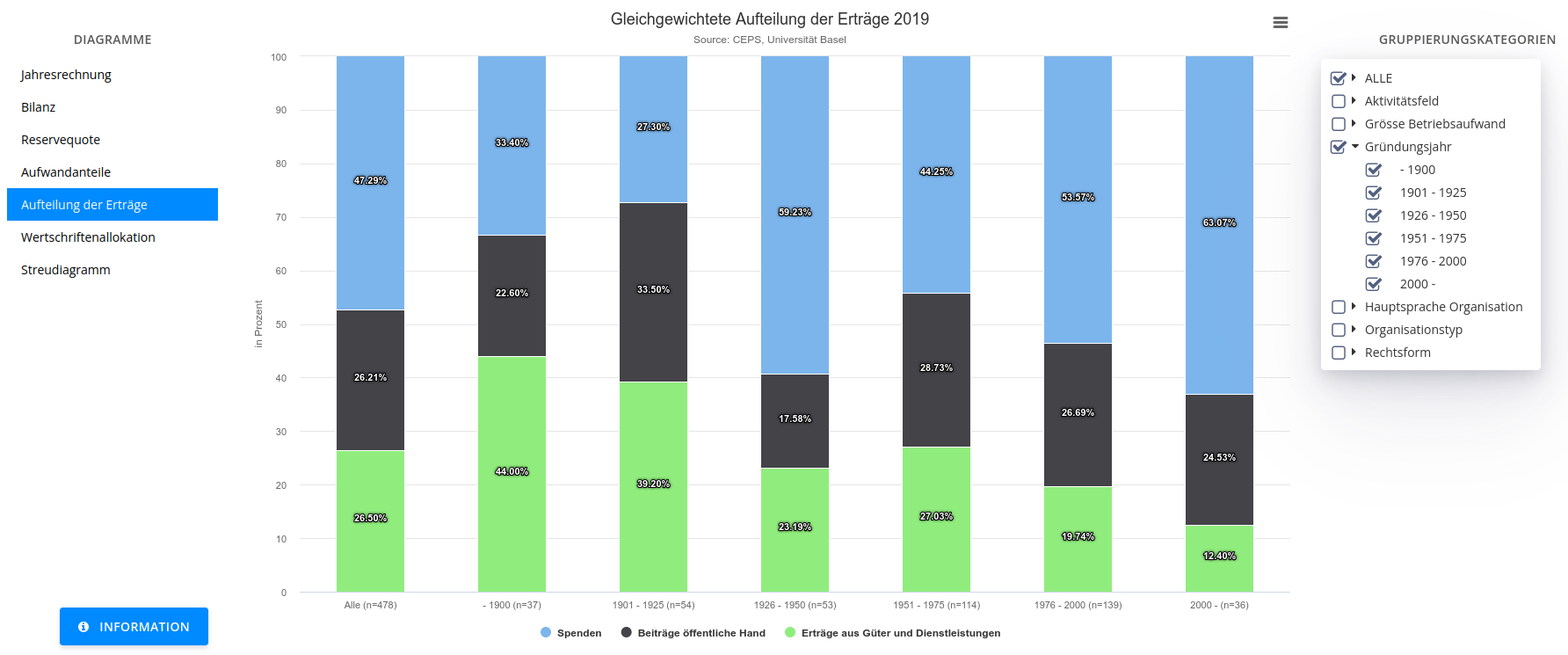
A similar picture can be found when one looks at the age of the organizations (carried off on the x-axis). Tendually, the older the organization, the smaller the share of income from donations.
Balance sheet focus
The larger an organization (measured in terms of operating expenses, carried off on the x-axis), the smaller is the share of liquid funds in the assets.
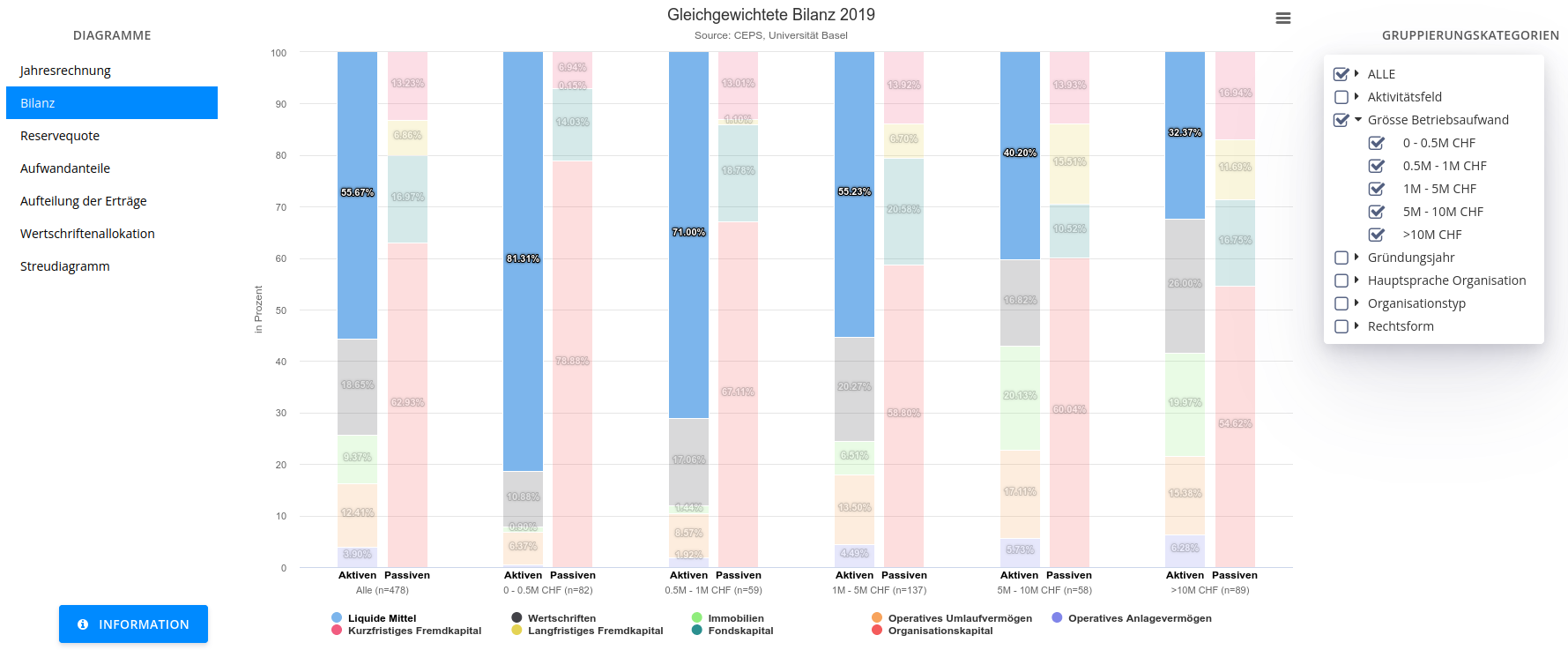
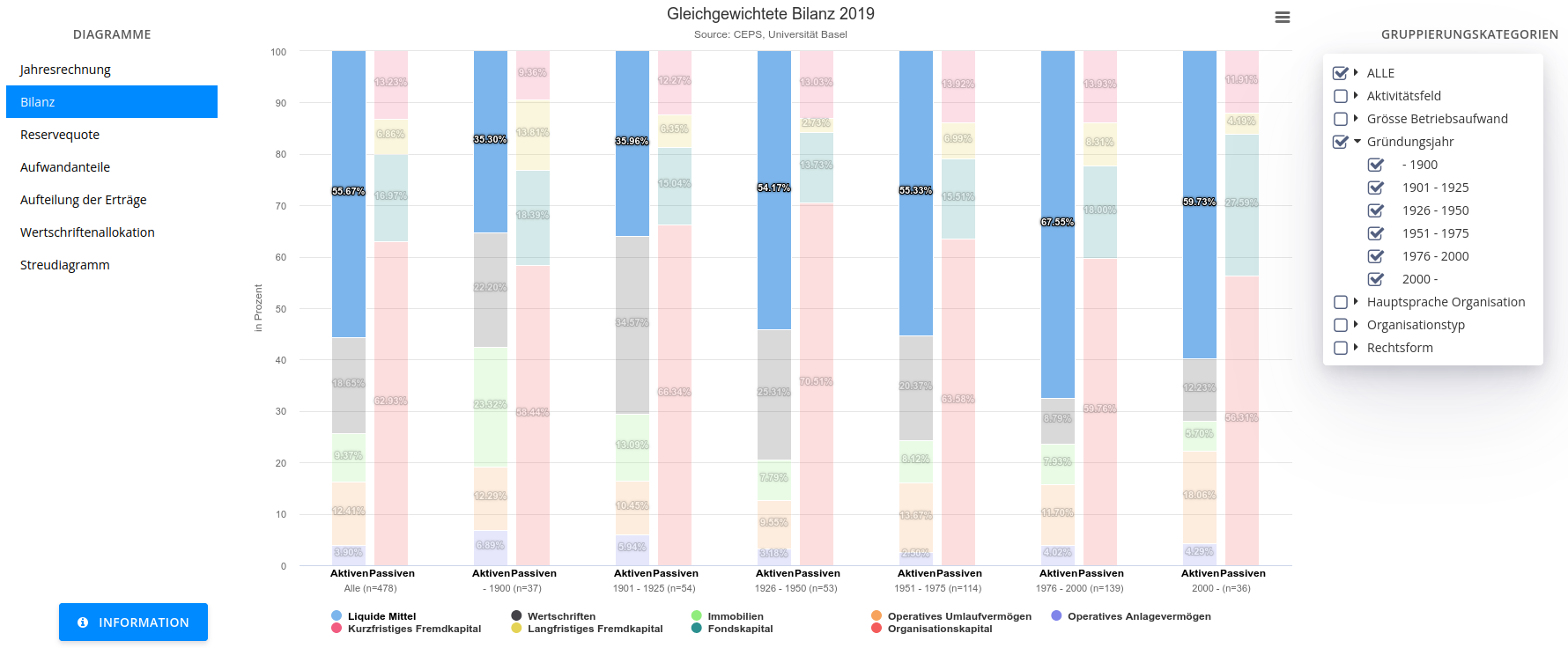
A similar picture emerges when one considers not the size, but the age of the organization. The older the organization, the smaller the proportion of liquid funds in the active capital. (And the larger the proportion of securities and real estate).
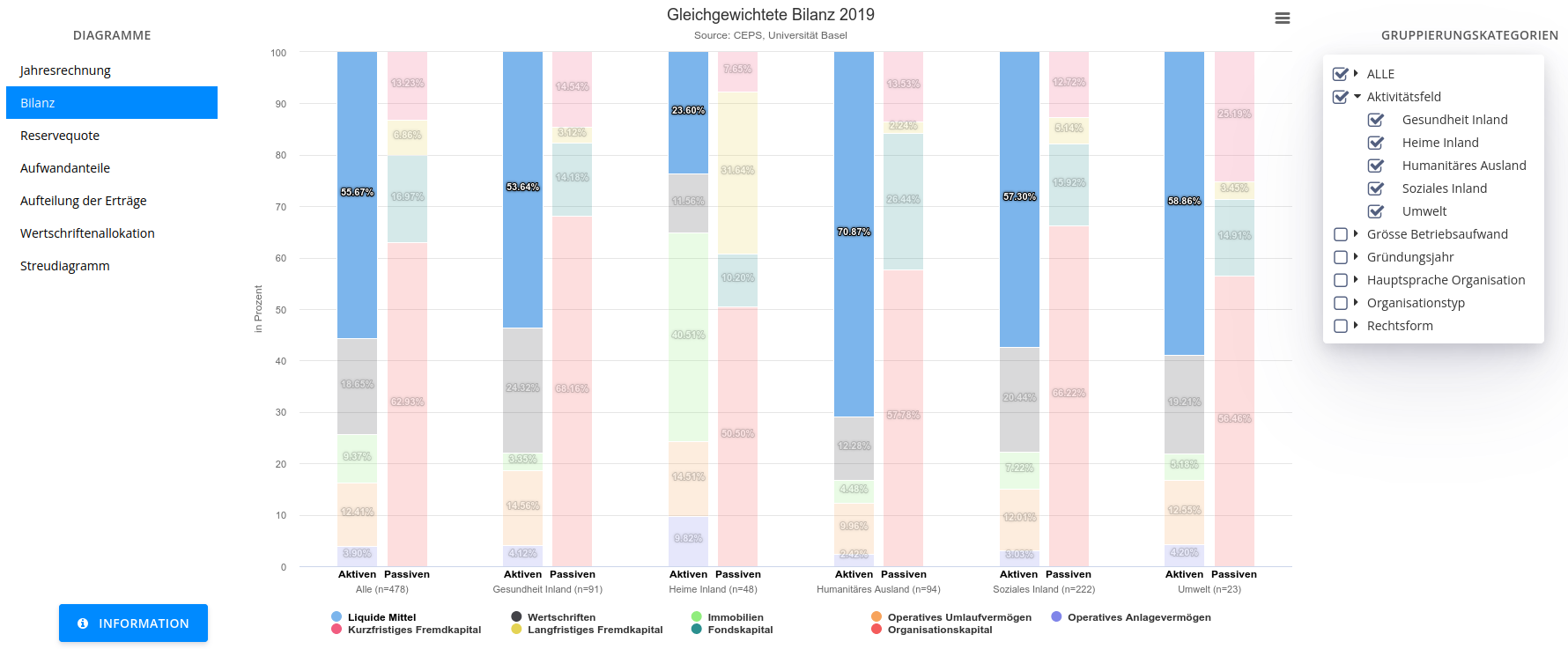
The next figure shows the balance sheet grouped according to their field of activity. It can be seen that organizations operating in humanitarian countries have the highest share of liquid funds.
Revenue scatter plot focus
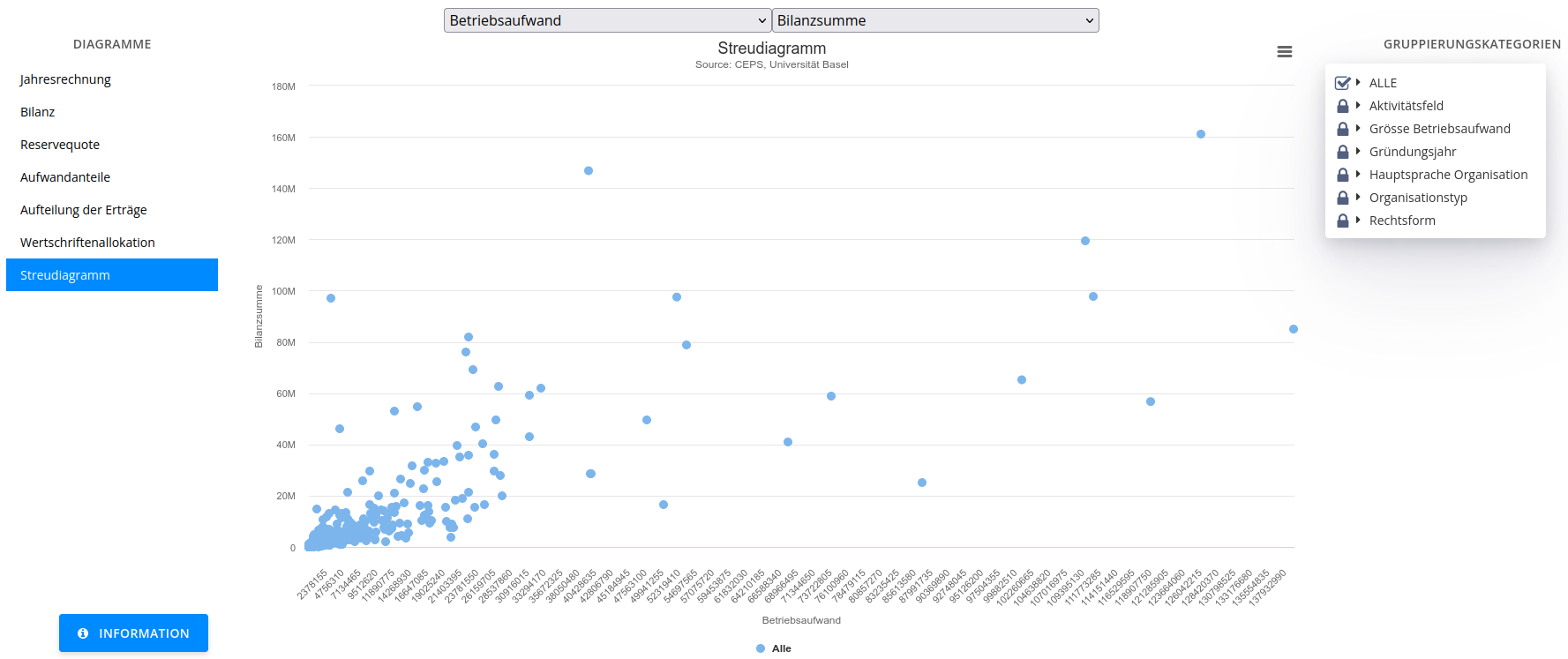
The data can also be presented in a so-called -scatterplot. With these figures one can illustrate the connection between two variables. For example, one sees a positive relationship between balance sheet total and operating expenses.
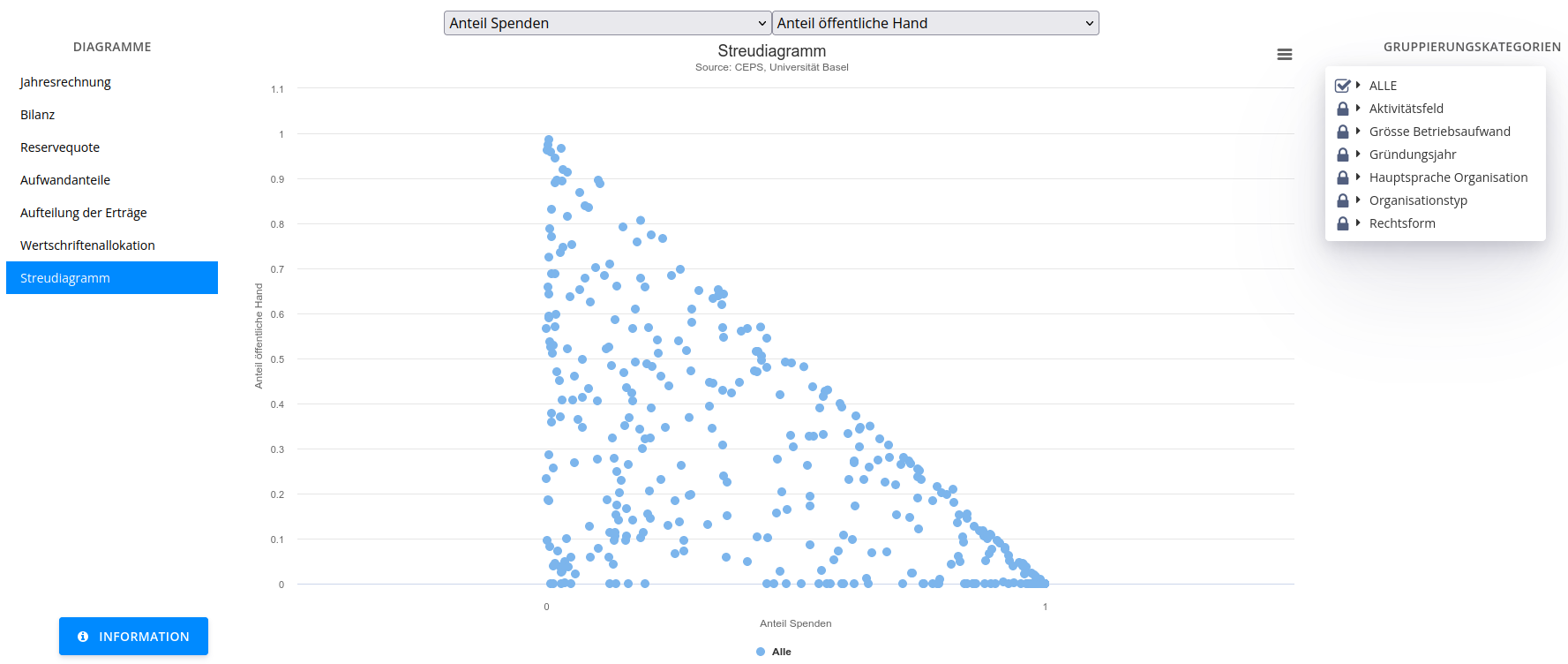
The following figure shows the relationship between donations and revenues from the public sector. The triangle pattern is based on the fact that these are shares (in total income), so the sum of both shares cannot be greater than 1.